

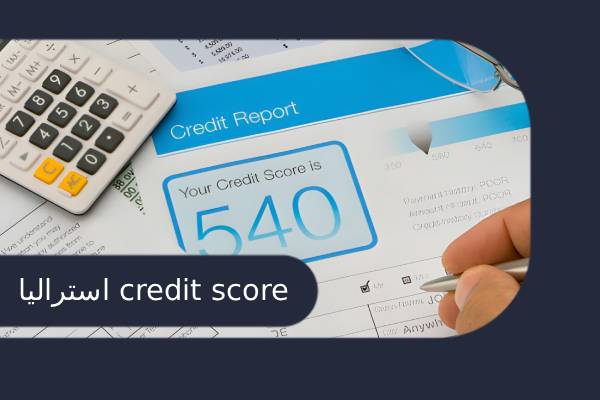
You've liked the home, made the down payment, and counted the installments, but the bank rejects your loan application or offers a higher-than-expected interest rate. One possible reason is a number you may not have come across until now: the Australian Credit Score. This number provides a picture of your credit management history and helps the lender assess the likelihood of repaying the debt on time.
Of course, the bank's decision doesn't just depend on this number. Income, current debts, living expenses, and ability to pay installments are also considered. However, your credit status can affect the acceptance of your mortgage, auto or credit card loan application and terms. Knowing this status before applying is an opportunity to find potential reporting errors and address weaknesses in your financial history.
In this guide from Newox Exchange, we'll start with the meaning of a credit score and get to the steps you need to take to check and improve it. We'll explain what a good score means on each scale, what changes it, and how to get your report for free. Whether you're new to Australia, or want to improve your record, you'll know how to check your current situation and what your next step is.
To know your credit score in Australia, you need to separate two concepts: a number that summarizes your credit status and a report that shows the details behind it. Knowing this difference will help you know what information each provides you when reviewing your history.
To start living in Australia, you'll probably calculate your budget according to Australian dollar rate. When applying for a loan, your credit management history is also important, which your credit score gives a numerical picture of.
This number is calculated from your credit record information and helps the lender estimate the likelihood of repaying future obligations on time. Equifax and Experian are the two main credit reporting institutions in Australia. The difference between the calculation models and the data they receive can cause your score to differ in the two sets. The name illion also appears in older sources. Experian acquired the institution and now provides consumer credit information from both sets in a single report.

A credit report records account details, credit limits, credit requests, repayment history, and possible negative information. A credit score is a number derived from the analysis of this information. The report can be considered a report and a score can be considered a score; it gives an overall picture score, but the report card shows where this result came from.
| Credit Report | Credit score |
| Account details and payment history | numerical summary of credit status |
| Display requests and negative information | risk estimation based on file information |
| help identify errors | show position on the scoring scale |
Therefore, checking the point number alone is not enough. There may be an unknown or delayed account registered incorrectly in the report. Reading the details will help you better understand the cause of the current situation and keep track of what needs to be corrected.
The
number 700 alone doesn't tell you how good your credit score is; first you need to know which set has calculated it. To interpret the Australian credit score , read the number next to the name of the provider and the category of the same service. A good label is a good starting point for knowing your situation, but it's not a guarantee of getting a loan.
range
In Equifax's official classification, the score is calculated from zero to 1,200, and the good range is between 661 and 734. Experian's current official page also introduces a scale of zero to 1,200, but it has a different category: scores of 500 to 699 are at a good level, so even the same cap doesn't mean that the numbers are interpreted the same.
|
Points Level |
Equifax; Current Scale |
Experian; Current Scale |
Illion, an old scale. |
|
Awesome |
853–1200 |
800–1200 |
800–1000 |
|
Very good. |
735–852 |
700–799 |
700–799 |
|
Good |
661–734 |
500–699 |
500–699 |
|
Medium/Improveable* |
460–660 |
300–499 |
300–499 |
|
Below Average/Low* |
0–459 |
0–299 |
1–299 |
*The categories are not exactly the same; Experian uses Fair and Low. In the old illion scale, levels 300 to 499 were introduced with the concept of need improvement, and the zero score had a separate status. The illion column is for reading old reports; this collection is now a subsidiary of Experian.
If you're a newcomer and planning to to transfer money to Australia and secure a down payment, check your credit status before applying for a loan. Having initial capital and having a good credit history are two different parts of your financial readiness.
When reading the report, pay attention to the date and scale on the same report; the table is a guide, and you shouldn't replace your current report category with a table from an old article.
Differences in scores are not necessarily an indication of errors. Each entity has its own computational model and may receive different information. The timing of data arrival and report updates can also vary, so no two services necessarily provide the same picture of your file.
For example, a score of 720 on Equifax is good and very good in the current Experian category. So comparing numbers regardless of the category may make the wrong impression.
If one service shows your status as good and the other as moderate, the information that the lender reviews is important for your specific request. Ask them which report or valuation model they use; choosing a service based solely on a higher score doesn't change the status of the case. Finally, the lender will also look at their income, expenses, liabilities, and internal metrics. It's a good idea to read both reports for accuracy and track your scoring process on the same scale.
To calculate the Australian credit score , credit record information is analyzed using each institution's statistical model. In the Comprehensive Credit Reporting (CCR) system, it's not just negative records that are recorded; accounts information and monthly repayment history are also included in the report. In this way, regular payments are also reflected in your credit picture.
One of the most important questions for a lender is: How regularly have you paid off your previous obligations? Repayment history shows whether the due payment has been made each month, such as a loan installment or a minimum credit card amount. Regular payments can help with the score; recorded delays may reduce it.
Not all delays have the same effect. Their number, duration, and freshness matter, depending on the evaluation model. An old delay with several consecutive overdue payments doesn't create the same picture.
Repayment history information is kept in the report for two years, so over time, new payments will replace the old records. Of course, removing an old delay alone does not guarantee a significant increase in the score; other file information also plays a role.
The type of accounts and their credit limits also play a role in the assessment. The credit limit is the maximum amount you are allowed to use, for example, a card with a limit of $10,000, which allows for more commitment, even when there is little debt. The credit usage ratio is the share of this limit spent. If you have used a $10,000 credit of $3,000, the ratio is 30%. This example illustrates the definition of the ratio; 30% is not the general Australian scoring rule. The credit report usually shows the account limit, not the actual balance of the debt. The lender may ask for the debit balance and the account turnover separately to check the ability to repay.
When you make a formal application for a loan or credit card, the provider may review your report. This review associated with the application is called hard enquiry and can affect the score.A few requests in a short period of time may be a sign for the lender of a growing need for credit. However, not every inquiry does not necessarily reduce the score, and the effect is not constant. A personal review of a report or score is different from a request for credit and does not in itself lower your score. You can also ask if the initial review phase creates a difficult inquiry before you file a request.
A long history of regular payments provides more information about how to manage your obligations. Account types, such as a mortgage, personal loan, or credit card, may also play a role in the calculation model, but limited history does not mean a negative history. A newcomer or someone who has used little credit so far may simply have less information on file. Don't create unnecessary debt to prolong the history or diversify accounts. The cost and obligation is a real loan, while an increase in points through opening a new account is not guaranteed.
Default is not the same as any simple default. For its usual filing, the debt must be at least $150, at least 60 days old, and written notice requirements have been met. Default and credit judgments typically last five years. Bankruptcy records are maintained for up to five years after it commences or two years after it ends, whichever is later. Paying the debt does not necessarily eliminate the default record immediately.
Income and savings are not directly credit scores, but they are important in checking your ability to repay. Receiving Australian dollar remittance does not in itself create a credit repayment history; an increase in the account balance should not be equated with an improvement in the score. A personal review does not reduce the score either.

Your credit information is not publicly available. Access to the report is subject to regulation and can only be reviewed by organizations in certain situations. Knowing these situations helps you understand what checks may be done when applying for a loan, opening a credit account, or entering into a service contract.
|
Reviewer |
Check Position |
Important Note |
|
Banks & Financial Institutions |
Applying for a mortgage, auto, personal loan, or credit card |
They may review the report and score along with income and financial obligations |
|
BNPL Services |
Opening an account or checking the increase in the purchase limit |
The type of inquiry and reporting depends on the policy of the same service |
|
Telecommunications & Services Companies |
Request for some telephone, internet, or energy contracts |
Access is allowed only within the framework; not all contracts have the same inquiry |
|
Your Own |
Get a report or view a score |
A personal assessment does not in itself reduce the score. |
The Australian Credit Score Review is part of the credit application assessment; the bank may also ask for evidence of income, account turnover, and current liabilities. Service companies also do not have the same access as banks; for example, access to a monthly repayment history is limited to the relevant licensed credit providers.
When renting a home, don't confuse the tenant database with a credit report. This database is related to rental history and has a separate system. Businesses and landlords do not have direct public access to a credit report. According to the OAIC guideline, if you are asked for a copy of the report, you are not required to provide it.
When
comparing loan offers, don't just use the name of the instrument. A rate review or pre-approval may be accompanied by a credit inquiry, depending on the lender and the stage of the application. Before submitting the form, ask if this review will be recorded in my file as a credit request. This question is especially important when comparing multiple offers at the same time; multiple requests in a short period of time can affect your evaluation.
Splitting the price of a purchase into several installments makes it easier to pay, but the financial commitment remains. The effect of services such as Afterpay, Zip , and Klarna on Australia's credit score depends on the type of inquiry, the information reported, and how you pay. Using BNPL does not always lower the score, nor is it a guarantee of building a positive record.
What have the
BNPL stands for Buy Now, Pay Later, a method that allows you to pay for your purchase in multiple payments. Some products are interest-free, but they may have an account fee, late penalty, or different terms. Check the total cost and installment dates before you buy.
As of June 10, 2025, Australia's regulatory reforms for these products came into effect. Covered providers must comply with the requirements for credit authorization and responsible accreditation; although there are modified requirements for some low-cost products. Therefore, BNPL regulations are not the same as credit card in all details.
Nor do these changes mean that all payments are automatically reported. You should read the specific product policy: What checks are done when you sign up and what information goes to the reporting agencies?
Separate three topics; inquiries on request, refund history reporting, and default registration. Each has different terms and effect. A service may check your case when you open an account, but not report monthly payments.
For example, Afterpay has stated that it may make an inquiry when requesting a membership or checking a higher limit, and this query may be visible to other credit providers. At the same time, according to the current policy, it does not send refund history, purchase limits, and current account activity to the reporting entities. Therefore, regular payments in Afterpay should not be automatically attributed to the increase in points.
Zip also states that an account request may be accompanied by a credit check. For Zip, Klarna , or any other product, check the type of inquiry and the scope of the report before applying to the official terms of the product.
Multiple accounts can be paid in installments and fees at the same timecreate more. Even if not all of this information is included in the report, the lender may also consider BNPL's obligations when reviewing income and expenses. The effect on borrowability is not the same as the direct effect on the score.
Before
each purchase, calculate the total available installments. The small size of each installment shouldn't make you underestimate the commitment of multiple accounts. To manage payments:
If you suspect that you will not be able to pay the installment, contact the service before the due date and check the donation route. The goal is to keep the purchase in line with the actual ability to pay, not just to prevent a single drop.
You don't need to purchase a subscription to check your credit score in Australia. You can get your credit report from official sources or get help from reputable credit score services. It's important to know where the information came from and when it was updated.
The starting point is the official website of Equifax or Experian. Select the Get Free Report section and complete the authentication process. Your name, date of birth, address, and requested documents must match your information. According to the Moneysmart Guide, you have the right to receive a free report from any reporting entity every three months, and this is not just a promotional offer.
Services like ClearScore also make it easier to view information. Remember the difference: the platform displays the information; the reporting body prepares the file and score. Before you use it, check the name of the data source, the date of the report, and the terms of retention of personal information. If you're a newcomer, opening a bank account in Australia helps manage local payments, but a regular bank account alone doesn't build a credit history. Not having a score may also be due to a lack of sufficient information on file.
Start reporting with your identity details and then move on to accounts. This checklist will help you avoid missing something:
For reconciliation, leave the contracts and payment receipts aside. If you see a discrepancy, keep the relevant page and documentation. Don't confuse the credit limit with the debt balance; the report usually shows the account limit, not the current amount of the debt.
A soft enquiry
, like a personal review of a report, is not a new credit request and does not reduce the score. A hard enquiry is a review related to a credit request and can play a role in the evaluation of the score. If you are using a loan initial review tool, ask for the type of inquiry; the title of the initial review alone does not guarantee that the request will not be filed on file.

Improving your Australian credit score starts with knowing the case, not looking for shortcuts. The result depends on current information, financial behaviour and when the data is updated. The following app helps you keep track of errors and make liability management a habit.
Get Equifax and Experian reports and put them together. The purpose of this step is not to compare the number of points; you need to see what each group has about you. Match your identity details, accounts, credit limit, payment history, and filed requests to your documents.
Make a list of suspicious items, what's wrong, what evidence do I have, and what collection should I follow? For example, if a payment is recorded as delayed, check the due date and payment receipt together.
Take the anonymous account seriously; it may be a registration error or a sign of unauthorized use of your information. Mark it for immediate follow-up.
To request a correction, you can contact your credit provider or reporting entity. You don't have to choose one first and wait for them to refer you to another. Describe the mistake in detail and attach documents such as payment receipts, invoices, or account closure letters.
Record the request in writing. Keep the date of submission, tracking number, responses, and call summaries. If the information is confirmed to be incorrect, the group must take the necessary corrective action within 30 days, unless you have agreed to a longer deadline. Receiving a fresh report will help you check the implementation of the remediation.
If the dispute is not resolved, follow the appropriate complaint path. AFCA has dispute resolution services for financial disputes in its jurisdiction; the OAIC also handles complaints related to privacy and credit reporting. For telecommunications services, another authority, such as TIO, may be relevant. Requesting correction of misinformation is free of charge and does not require the purchase of credit restoration services.
Your payment plan should align with when you receive your income. Record all due dates in a calendar and leave a reminder a few days before each appointment. If you enable automatic payment, check the amount and withdrawal date; not having enough balance can disrupt the plan.
For a credit card, paying the minimum amount will help avoid arrears, but it won't necessarily reduce the debt quickly. If you can afford it, put more money in the repayment budget. For loans, also set the stipulated amount of a new contract or agreement as a criterion.
If a payment is overdue,First, ask the lender about the status of the account and the amount needed to fix the arrears. When your income decreases or your expenses increase, talk about help in financial difficulties before the problem escalates. It may be possible to change your payment plan. Get the agreement in writing and make sure of the amount, duration, and terms; don't promise that your budget won't allow it to be implemented.
Make a list of outstanding debts, interest rates, expenses and monthly payment amounts. Then write down reliable income and necessary expenses. A realistic estimate The cost of living in Australia, depending on the city and household circumstances, will help you determine an amount to repay that you can continue the following month.
After covering the necessary payments, decide on the additional amount. Focusing on higher-interest debt can reduce the cost of interest, but the plan should be aligned with the terms of your contract and financial ability.
Don't think of increasing the card limit as an automatic solution to improving your score. Higher limits also make it possible to borrow more. Also, ratios such as "consumption below 30 per cent" are not the general rule of all Australian models; the account limit is recorded in the report, but the actual balance of the debt is usually not included in the information.
To find the right offer, you don't have to submit multi-card, loan, and BNPL account application forms at the same time. First, read the terms of income, accommodation, fees, and necessary documents. Then narrow down the appropriate options.
If an initial review tool is available, ask before use if it generates a hard inquiry. A few requests in a short period of time may affect the credit assessment, but a score reduction is not definitive for each request. Interruption on unnecessary requests does not create a new commitment and gives the opportunity to handle current accounts.
An account that is old alone is not a sufficient reason to keep it. Check the annual fee, actual use, credit limit, and the likelihood of spending more than budget. An account you don't use may still have a cost or the possibility of creating debt. On the other hand, closing all accounts just to increase your score is not a good generic prescription either. Before closing the account, check the debit balance, connected automatic payments, and settlement terms. Make the decision based on your financial situation and the purpose of the borrowing; an increase in points is not guaranteed after closing or holding the account.
Record the date of the report, the score number, the category, and the items that need to be followed. In the next review, base the same source and scale for a meaningful comparison. Don't just measure the number; has the error been corrected? A new payment is overdue? Have you filed an unnecessary request? The information may improve, but the score may not change immediately. Limited fluctuation is also not always a sign of a problem; the case process and the accuracy of the information are more useful metrics to follow.
The program is meant to discipline actions, not promise to increase points in the quarter:
Sometimes a misperception leads to an inappropriate financial decision, for example, you don't check your report for fear of a downgrade, or you think that a high income will compensate for a history of irregular payments. The table below clarifies the line between these beliefs and reality.
|
Misconception |
Correct explanation |
|
A personal review of the score will reduce it. |
Receiving a report or viewing your own score is not a new credit request and does not in itself reduce the score. An inquiry related to applying for a loan or credit card is a different matter. |
|
Each person has only one credit score. |
Equifax and Experian don't have the same models and data; they may show different scores on the same day. Read the number along with the source name and scale of the same report. |
|
BNPL has nothing to do with credit assessment. |
An account request may be accompanied by an inquiry. Reporting payments depends on the service policy; installment obligations can also be important in checking the loan's ability to repay. |
|
High earnings directly increase the score. |
Income and savings are not the same as credit history. The lender checks income to measure the ability to pay, but higher income does not automatically mean a higher score. |
|
Rent payments are always recorded on the credit report. |
Regular rental payments are not automatically included in the credit report. The tenants' database has a separate system, and the rent debt should not be automatically considered the equivalent of a default recorded in the credit file. |
These differences have a practical consequence: to make a decision, check the reporting information and financial product conditions. Going up or down the account balance, opening a new account, or paying a fee doesn't necessarily mean a change in the score.

Not all loan applicants have a long history or a fixed monthly salary. To know Australia's credit score in this situation, it is necessary to separate the limited case information from the negative history and the fluctuation of income from the inability to repay.
If you have a low credit account, your case may be low track or thin file, which means there isn't enough data to make an accurate assessment. This isn't the same as a history of default or overdue payments. You may even not have a score yet.
Focus on managing real obligations: Know the due date of payments and don't commit more than you can afford. Just to create a record, a loanOr don't take an unnecessary card. Also, don't assume that every BNPL bill or payment sets a positive record; it should be clear what information is being reported.
For the self-employed, the credit score is only part of the loan application. The lender must also identify reliable income; they may ask for tax returns, business financial statements, and account turnover. The necessary documents and the period to be considered depend on the bank and the product.
Separating accounts and personal expenses from the business will make it easier to explain your financial situation. Don't equate the amount deposited into the account with net income; operating expenses, taxes, and liabilities should be reflected in the repayment budget. Get a list of documents from the lender before applying.
You shouldn't expect your previous country's credit score to automatically appear with the same number on the Australian report. Ask the specific lender about the possibility of reviewing documents or a foreign report; don't assume that accepting it is a general rule.
To get started, include the same name, date of birth, and address on the same documents and accounts. Know the due dates and how to report when using local credit products. If you don't have a score, investigate the cause; a lack of information or a lack of information can play a role in filing.
Managing your initial capital is also a separate issue. Checking the price of the Australian dollar helps to convert the rial budget and estimate the financial resources; opening a bank account in Australia also makes it easier to manage local payments. But a regular bank account balance does not replace a credit repayment history. Having savings is important to start life; building a credit record depends on the information that is recorded from your credit applications and obligations.
The
effect of a credit score becomes palpable when your application is reviewed: will you be accepted and what conditions will you accept? However, the Australian credit score alone does not determine the answer to these questions; repayment affordability and the provider's policy are also important.
Credit status can affect the options available and the rate offered. When ⟦getting a loan in Australia⟧, the lender will also check your income, living expenses, liabilities, and the amount of the down payment, depending on the product. Even a high score does not guarantee a loan whose installments are beyond your means.
To see the effect of interest rates, consider a hypothetical example: a $20,000 auto loan, a five-year repayment, equal monthly installments, and a flat rate; no fees, a large final payment, or an early repayment.
|
Hypothetical Annual Rate |
Approximate monthly installment |
Approximate Total Interest |
|
6.5 percent |
$391.32 |
$3,479 |
|
9.5 percent |
$420.04 |
$5,202 |
In this example, three percentage points of the rate difference adds about $29 to the monthly installment and $1,723 to the total interest. Rates are not the actual market offer and cannot be directly attributed to a single point level. The purpose is to show the importance of the final terms of the contract. ForRead the comparison of offers, fees, and the total amount of repayment along with the interest rate.
On a credit card, the evaluation of the case can affect the acceptance of the application and the approved limit. Providers do not have the same criteria; the outcome of one application does not predict the outcome of all other applications.
At BNPL, credit checks, in-service payment history, and affordability may also play a role in the decision. Afterpay, for example, may make an inquiry when you subscribe or check a higher limit. Having the right score is not a license to create an unlimited commitment; multi-service installments should be included in the budget. Recalculate the total monthly payments before requesting a cap increase.
In rent, rent payment history, income, and referrals are not the same as a credit report. The agency or landlord may check the tenants' database, but they do not have direct public access to the credit report. According to the OAIC, you are not required to provide them with a copy of the report.
For some service contracts, a credit check may be done within the permitted framework. Before submitting a request, ask about the documents, the type of review, and the terms of the contract, as the procedure is not the same for all companies.

Knowing Australia's
credit score is valuable when it comes to making better financial decisions. It's part of your assessment; income, expenses and repayment power also play a role in the lender's decision. So don't just aim to increase your score; the accuracy of your case information and liability management are also important.
The starting point is to get Equifax and Experian reports. Review the information, track errors for correction, and keep payments in sync with your actual budget. Then plan to reduce your debt and eliminate unnecessary credit requests. The outcome depends on the status of the case and when fresh information is filed; don't expect an immediate change.
Get your report today and write down three actions that are tailored to your situation: following up on a mistake, setting up a reminder or automatic payment, and setting a payable amount to reduce debt. Set a deadline for each action to turn your plan from a decision on paper to something that can be followed.
What is a good credit score in Australia?
The "good" range is 661 to 734 on Equifax and 500 to 699 in Experian's current official classification. So there's no single number for all services; check the scale and category of your report.
Will checking my credit score lower it?
No, a personal review of the report or score is not a new credit request and does not reduce the score. The inquiry associated with a loan or credit card application is different and may have an effect on the score calculation.
How long does negative information stay on the credit report?
The retention period is not the same. The repayment history is two years and default and credit judgments usually remain five years. Bankruptcy is held for up to five years after it begins or two years after its termination, whichever is later.
Why my score is different on Equifax and Experian Is it?
Each set has its own computational model and may receive different data. Update times are also not the same, so the difference in numbers is not necessarily a sign of error. Interpret each score in the same set category.
Do Afterpay and other BNPL services affect credit score?
It is possible, but the policies of the services vary. Afterpay may make an inquiry when requesting a membership or reviewing a higher limit, but under the current policy, it does not report payment history and account limits. Read the terms of each product separately.
Does paying the debt remove the default history from the report?
No, a debt payment usually changes the default status to paid, but it does not automatically delete the record. The default registration remains valid until the end of the legal term, unless it is a mistake and there are conditions for its correction or deletion.
How often should I check my credit report?
It
is possible to receive a free report from any major entity every three months. Checking before applying for an important loan is also helpful, especially if you have recently tracked down an error or your account information has changed.
Does high income increase credit score?
No, high income doesn't directly increase the score. However, the lender checks income along with expenses and liabilities to gauge repayment. Proper income doesn't automatically clear irregular payment history, or negative file information.
Does paying rent help build credit history?
The usual automatic rent payment is not recorded in the credit report. The rental history and the tenant database have a separate system, so regular rent payments should not be considered equivalent to an increase in the credit score without examining the method of reporting.
What should I do if I find an error on my credit report?
Contact your credit provider or reporting entity and file a request for correction along with the documents. Keep correspondence and tracking numbers. If the dispute is not resolved, check the relevant complaint path, such as AFCA or OAIC.
